Six Window Brands for a Modern Mountain Home
In a mountain home, the window is part of the view. It also decides how the house handles cold, wind, and a February storm. You choose one window line for the whole house. Then the right type for each wall.
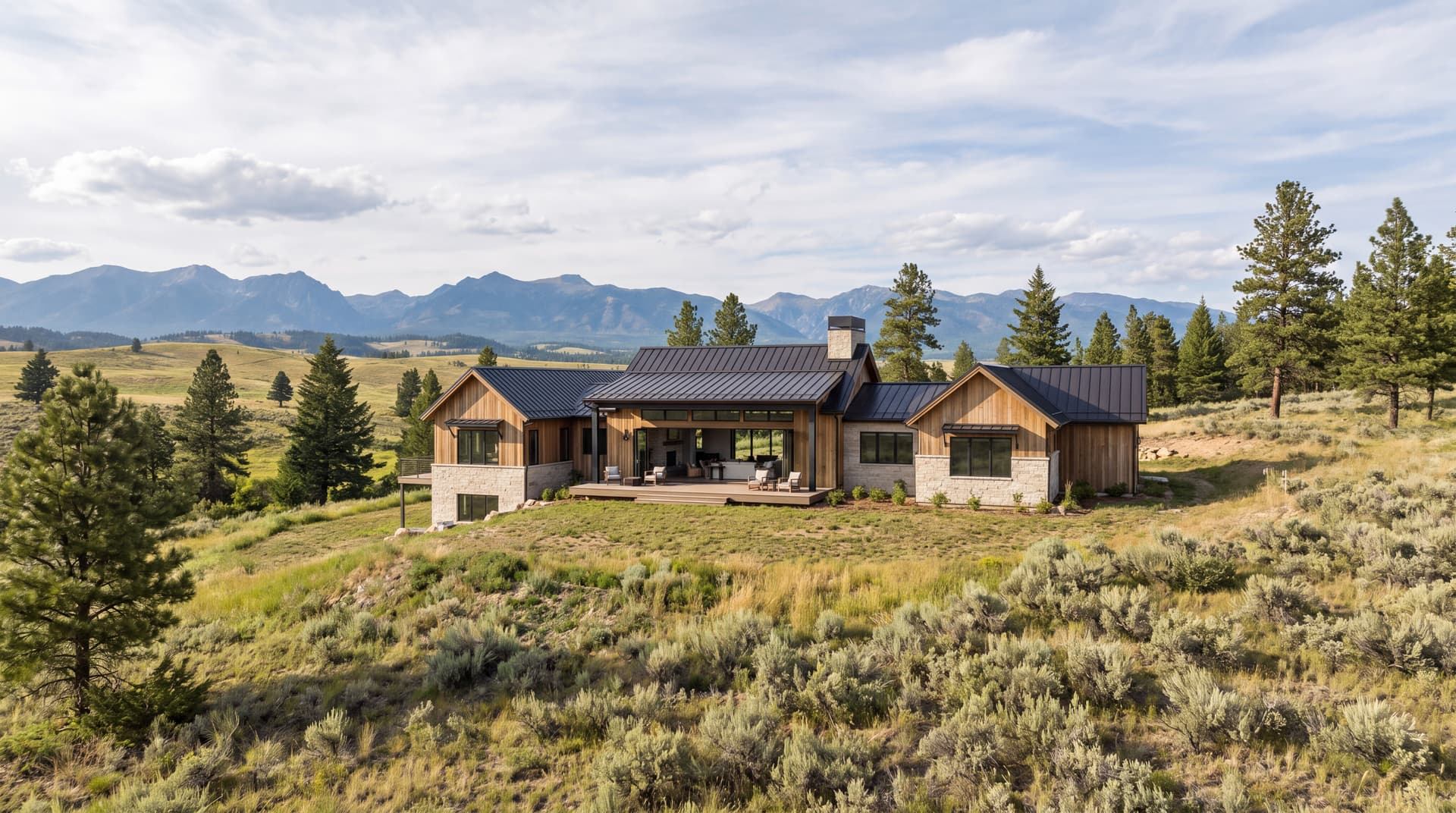
HUT has no paid relationship with any of them.
Three you know
Andersen
Founded in 1903 as a lumber company in Hudson, Wisconsin. The E-Series is wood inside, aluminum-clad outside, made to custom sizes.
Pros: A name your builder knows. Dealers and service in almost every market. A wide range of colors and shapes.
Cons: Andersen sells many lines at many prices. Name the series in the drawings, or the house may get a different one. Frames run wider than the modern specialists.
Where: The Blue Ridge in North Carolina and Virginia, and New York's Adirondacks, where a dealer down the road matters as much as the spec.
For: A warmer, more traditional mountain house. Wood inside, a familiar name.
Marvin
Family-owned since 1912, in Warroad, Minnesota. The Modern line pairs high-density fiberglass outside with aluminum inside.
Pros: Fixed glass up to 12' × 8'. U-factor as low as 0.15 (lower means better insulation). Fiberglass frames expand and contract very little with temperature changes.
Cons: Strictly modern. No wood inside this line, so it reads cooler in a cabin-style room.
Where: Colorado, Utah, and New Mexico. High sites with hard sun and wide swings in temperature.
For: A modern house built around one large view wall.
Pella
Since 1925, still owned by the Kuyper family. The Reserve Contemporary casement is aluminum-clad wood.
Pros: A casement presses shut into its seal, which matters in mountain wind. Limited lifetime warranty.
Cons: Wood on the inside needs care on walls that take strong sun. The sash swings out, so keep it off decks and walkways.
Where: Exposed ridgelines in the Tennessee Smokies, West Virginia, and New Hampshire's White Mountains.
For: Warm wood inside, a clean modern profile outside.
Three you should
Zola
Founded in Steamboat Springs, Colorado, by Swiss-trained architect Florian Speier. European-made windows and doors for cold places.
Pros: Triple glazing available. The Breeze Panel folding wall comes in wood, clad wood, or aluminum.
Cons: Fewer installers know the product. Ask about lead time early, and expect to pay more than for the familiar names.
Where: Montana, Wyoming, Maine, and Vermont, where winters run long and hard.
For: A very cold site, high energy goals, and a great room that opens to the deck in summer.
Kolbe
Since 1946, when two brothers started it in Wausau, Wisconsin. Still family-owned. The VistaLuxe WD casement is aluminum-clad, wood inside.
Pros: Units mull together into tall walls of glass. Strong at custom sizes and shapes, like a gable end.
Cons: A smaller dealer network. Custom work needs careful detailing and more time.
Where: Idaho and the Cascades of Washington and Oregon, where a great room faces a long view.
For: Large custom openings and gabled great rooms.
Fleetwood
Since 1961, made in a Southern California factory. Aluminum only, so the frames stay slim.
Pros: The thinnest frames of the six. Casements, awnings, fixed units, and hoppers in one collection, with a thermal break in the frame.
Cons: Aluminum carries cold better than wood or fiberglass, even with a thermal break. Confirm cold-climate ratings before you commit.
Where: Milder sites. Arizona's high desert, the north Georgia mountains, California's Sierra foothills.
For: A very modern house where the frame should almost disappear.
How to choose
Start with the walls, not the brand.
Which ones face the view, the afternoon sun, and the prevailing wind?
Fixed glass for the view. Casements for the wind. Sliders where a sash would swing into a path.
Then ask five questions:
1. Is the glazing rated for your climate?
2. Who installs it, and are they certified?
3. How long is the lead time?
4. What does the warranty cover?
5. Does it transfer if you sell?
Tell us about your land
We specify windows with your contruction documents, so they're settled before the construction process begins.